
WHAT ARE THE DIFFERENT TYPES OF FAUCETS FOR BATHROOMS?
If you are shopping for bathroom taps without a plan, be ready to be overwhelmed with the choices. For instance, modern bathroom taps are necessary for the functioning and usefulness of the bathtub, shower, and vanity. However, you should avoid making the common mistake of taking the types of taps for granted.
Bathroom faucets are among the items in the room that are used the most when given the chance. Low quality or wrong type of taps can increase your maintenance bill not only for the tap but also for other things like the floor or wall tiles, sink, etc.
Because there are so many different types of taps, as well as a variety of specs, styles, and features, it is simple to understand how challenging and intimidating it may be for individuals who are in the market for new taps.
What kinds of taps are ideal for your bathroom? Learn about the seven different tap designs you can use in your bathroom and other areas in your home.
1. Wall-Mounted Taps
Wall-mounted taps are installed above a bathtub or sink in the wall. They typically have a spout with a cover plate and a single handle. Since everything is inside the wall and access requires removing the plate, they require a little more work to maintain.
Taps that are installed on walls are also modern. They often fill the bathtub or sink and are fastened to the wall. The wall-mounted taps are simpler to clean, but since the plumbing is always in the wall, fixing them might be difficult.
Their attraction from the point of view of room maximisation is clear, and many wall-mounted tap models also have sleek, modern design elements ideal for improving a contemporary bathroom. They are also extremely easy to clean.
2. Floor-Mounted Taps
If you are a fan of the bathtub, instead of installing filler taps on the wall, floor taps can be placed on the floor. To cover the opening, they have a lengthy body. They have such a chic, modern appearance, but it takes planning to locate the plumbing in the right place on the floor.
3. Deck-Mounted Faucets
The hot and cold feed holes for these taps are normally pre-drilled and installed on a bath. After being heated to the correct temperature, the water is blended and spat out of the spout. They can quickly fill the bath since they have higher flow rates than basin taps.
The design was historically paired with sinks or basins for bathrooms. The foundation for the connection of deck-mounted taps is provided by tap holes that are drilled into the rim of the basin or bathtub.
Deck-mounted bathroom tap models are among the most popular because they allow the pipes and plumbing to have the quickest access to the bathtub or basin.
4. Bath Filler Taps (Mixer Taps)
When it comes to bathtub filler taps, the name encapsulates the design better than any lengthy explanation. These wall-mounted 2 in 1 or 3-in-1 mixer tap designs are more common in modern Indian bathrooms.
Bath filler taps disperse hot and cold water, and they typically have two knobs or levers to regulate the water's flow and temperature.
The best advantage of these taps is that you can connect an overhead shower and a hand shower with the tap.
5. Sink Mixer Taps
These sink mixer tap designs are available in traditional as well as modern looks. They use a dual lever function to mix hot and cold streams. These taps are best for kitchen sinks but also work well with the bathroom sink.
6. Pillar Taps
Close your eyes and picture a typical, 'hot' and 'cold' marked tap that is probably in a bathroom. That is the pillar type of tap, which is still widely used in contemporary architecture.
In pillar, taps are ubiquitous for bathroom and kitchen sinks. Usually, they are fixed to baths or basins with two mounting holes—one for each of the hot and cold feeds. They typically use rubber stop valves and have a single tap for both hot and cold water.
7. Countertop Sink Mixer Faucets
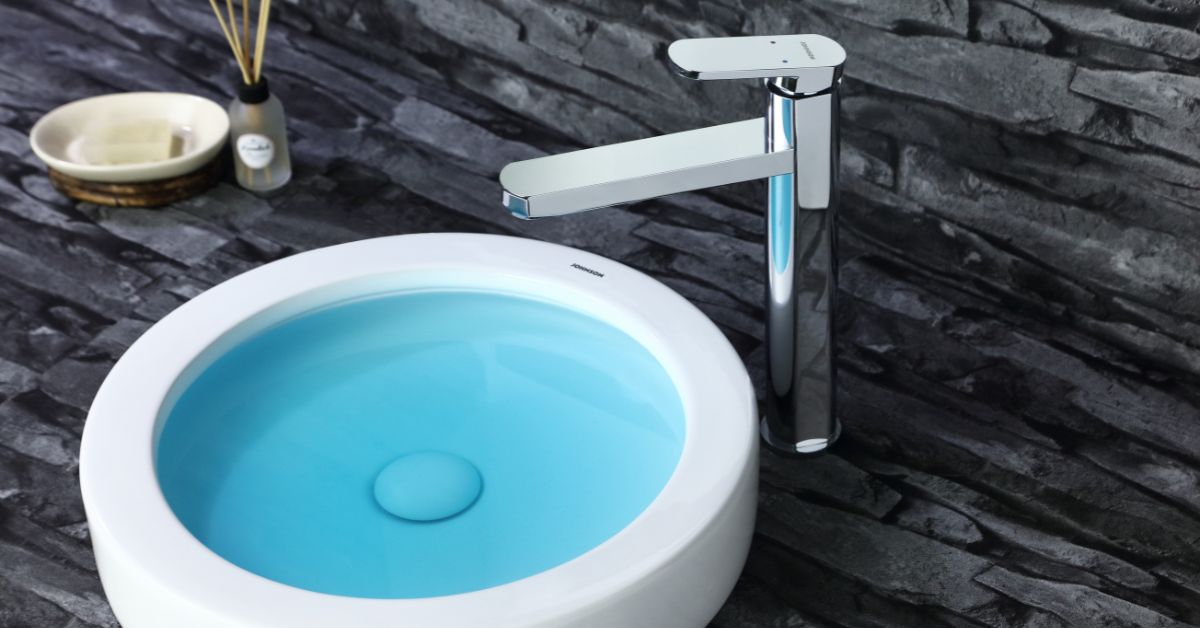
High-rise profiles predominate in Big Bathroom Shop's selection of countertop bathroom taps. The tall mixer taps are the ideal match for any sink from our collection of countertop basins thanks to their charming, rounded design components.
For a simplified appearance and straightforward water management, most models just have one lever.
Select A Theme for Faucets & Bathroom Fittings
Johnson Bathroom fittings offer an entire range of bath fittings and faucets. These bath fittings have been designed to gel well together while offering superb appearance and lasting functionality.
With a greater understanding of the features, benefits, and disadvantages offered by each type of bathroom tap, you can start choosing the best model to adorn your bathroom.
FAQS:
1. How to clean bathroom taps?
Limescale is likely the obstacle if your faucet's water pressure has noticeably decreased. So how do you clean such faucets? Simply rub the calcified region with the cut side of a lemon. Make a solution of equal parts white vinegar and warm water to remove limescale build-up from the area around your taps. To clean your faucets, dunk a cloth into the mixture. If there is a tough limescale accumulation, you can wrap the area in a cloth dipped in vinegar solution and let it sit for an hour before rinsing it off.
2. What are the different types of taps?
There are many different types of taps based on a variety of specs, styles, and features. Some of the most common kitchen and bathroom tap designs are:
-
Pillar Taps
-
2-in-1 Mixer Taps
-
3-in-1 Mixer Taps
-
Sensor Taps
-
Bib Taps
-
Wall Mounted Taps
-
Concealed Mixer Taps
-
Floor/Deck Mounted Mixer Taps
-
Goose Neck Sink Tap